
Artificial turf is one of the most common upgrades we do in the valley, and the first question is almost always the same: what will it cost? The honest answer is that it depends on your yard, but you can get a realistic range before anyone ever visits. Here is how the pricing works in 2026 and what actually moves the number up or down.
The typical price range
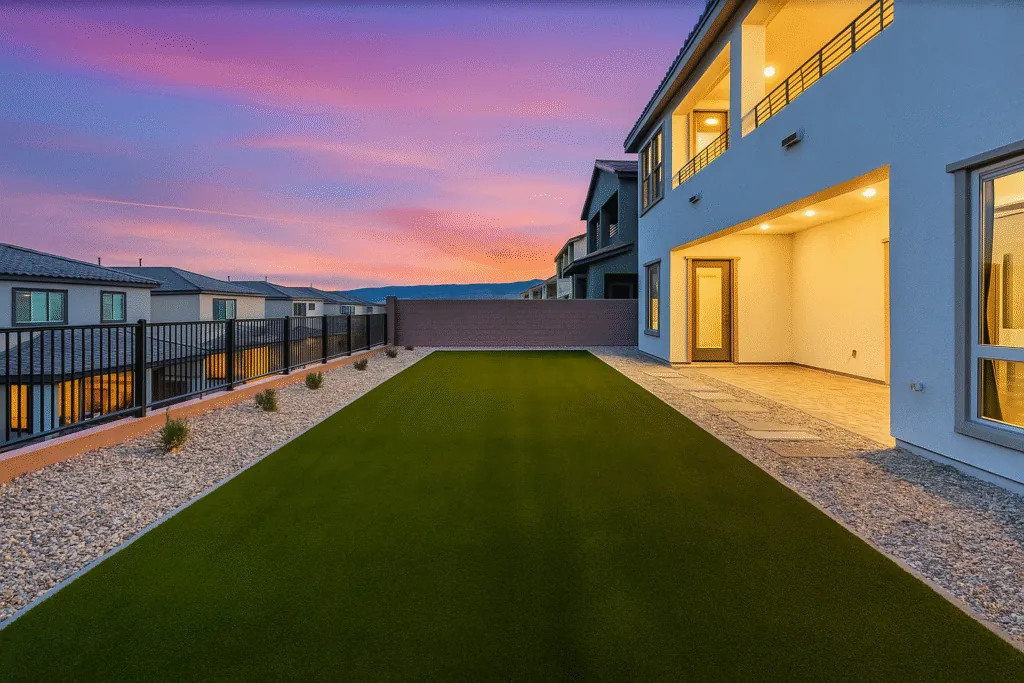
Installed artificial turf in Las Vegas runs $9 to $15 per square foot for most residential yards, with economy products as low as $6 and pet turf or putting greens up to $25. A 500 square foot lawn at $11 per square foot costs about $5,500 before the SNWA rebate, which pays $5 per square foot on qualifying conversions.
| Turf grade | Face weight | Typical use | Installed cost per sq ft |
|---|---|---|---|
| Economy | 40–55 oz | Low-traffic areas, side yards | $6–$9 |
| Standard | 60–75 oz | Family lawns, front yards | $9–$12 |
| Premium heat-rated | 80–100 oz | High-traffic lawns, full sun | $12–$15 |
| Pet turf | 60–80 oz with permeable backing | Dog runs and pet areas | $12–$18 |
| Putting green | Dedicated putting surface | Backyard greens | $15–$25 |
Installed prices include grass removal, base preparation, turf, infill and edging. The SNWA Water Smart Landscapes rebate of $5 per square foot (plus $2 in qualifying LVVWD areas) is applied separately when the conversion qualifies.
For most residential projects in Las Vegas, installed artificial turf runs somewhere in the range of 9 to 15 dollars per square foot. Simple, large, rectangular areas tend to land at the lower end. Small, oddly shaped, or premium installations land higher. Across the market you will see quotes as low as 6 dollars and as high as 25 dollars per square foot, which tells you how much the details matter.
To put that in plain terms, a 500 square foot area at 11 dollars per square foot comes to about 5,500 dollars before any rebate.
What drives the cost
| Component | Specification | Why it matters |
|---|---|---|
| Pile height | 1–2 inches for lawns; 1–1.25 inches for pet turf; ½ inch for putting greens | Shorter pile stands up to pets and traffic; taller pile looks lusher but mats |
| Infill | Silica sand (standard); coated or cooling infill; zeolite for pet odor | Weighs turf down, keeps blades upright and controls surface heat and odor |
| Base depth | 3–4 inches of compacted crushed rock over graded subgrade | Drainage and a flat, stable surface; shallow bases are why cheap installs sink |
| Backing | Polyurethane with drainage holes; fully permeable backing for pet turf | Lets monsoon rain and pet urine drain through instead of pooling |
| Edging | Bender board or paver edge with turf nailed at 6-inch spacing | Keeps edges from lifting as the turf expands and contracts in heat |
| Expected life | 15 years or more for standard and premium grades | UV-stabilised fibers hold color through Las Vegas summers |
A few things explain most of the difference between a low quote and a high one:
- Turf quality. The grass itself ranges from thin economy products to dense, heat-resistant turf with better blade shapes and UV protection. Better turf costs more and lasts longer, often 15 years or more.
- Base preparation. A proper install means excavating a few inches and laying a compacted base for drainage. In Las Vegas this is where caliche, the hard rock layer under our soil, can add labor if crews have to break through it.
- Size and shape. Bigger areas usually cost less per square foot. Curves, tight corners, and fitting turf around pavers or planters add labor.
- The material brushed into the turf affects feel and surface temperature. Cooling and pet-specific infills cost more than standard sand.
- Old lawn removal. Tearing out and hauling away existing grass is part of the job and figures into the total.
The water rebate changes the math
This is the part homeowners often miss. The Southern Nevada Water Authority pays a rebate to replace living grass with water-smart landscaping, and that rebate can cover a large share of a turf or desert conversion. As of 2026, the SNWA rebate is 5 dollars per square foot for the first 10,000 square feet for single-family homes. Customers of the Las Vegas Valley Water District can receive an extra 2 dollars per square foot in qualifying areas, and the City of Henderson adds a flat supplement for its residents.
There is one rule you cannot skip. You have to apply and pass a pre-conversion inspection before you remove any grass. Tear it out first and you lose the rebate. Permeable turf can qualify, but the conversion has to meet the program standards, so it is worth planning the project around the rebate from the start.
The long-term savings
The upfront cost is only half the story. A square foot of grass uses far more water than desert landscaping, and turf removes the watering bill for that area almost entirely. Over a year that is a meaningful cut to your bill, on top of no more mowing, fertilizing, or reseeding. Add the time you get back, and many homeowners see the project pay for itself within a few years, especially once the rebate is applied.
There is also the maintenance side. Turf is low effort, not no effort. It needs the occasional rinse and debris cleanup to stay looking right, which is straightforward and something we also handle through our turf cleaning service.
Getting an accurate number for your yard
Because base prep and shape vary so much from yard to yard, a real quote means measuring the space and looking at the ground. We can do that and show you what the rebate would knock off the total.
See our turf installation page for how the process works, or request a free quote and we will give you a clear, itemized estimate. Call (725) 305-1220 to get started.
Rebate amounts are set by local water agencies and have changed more than once in the past year. Confirm the current rate before planning your project.