The best time to landscape in Las Vegas is October through April. Daytime highs sit between 60 and 85 °F, new plants root before summer, and crews can work full days on pavers and travertine. Hardscape and artificial turf can be installed year-round, but planting in June, July or August is the one thing we tell homeowners to avoid.
Here is how the year breaks down, and what makes sense to do in each stretch.
The short answer by project type
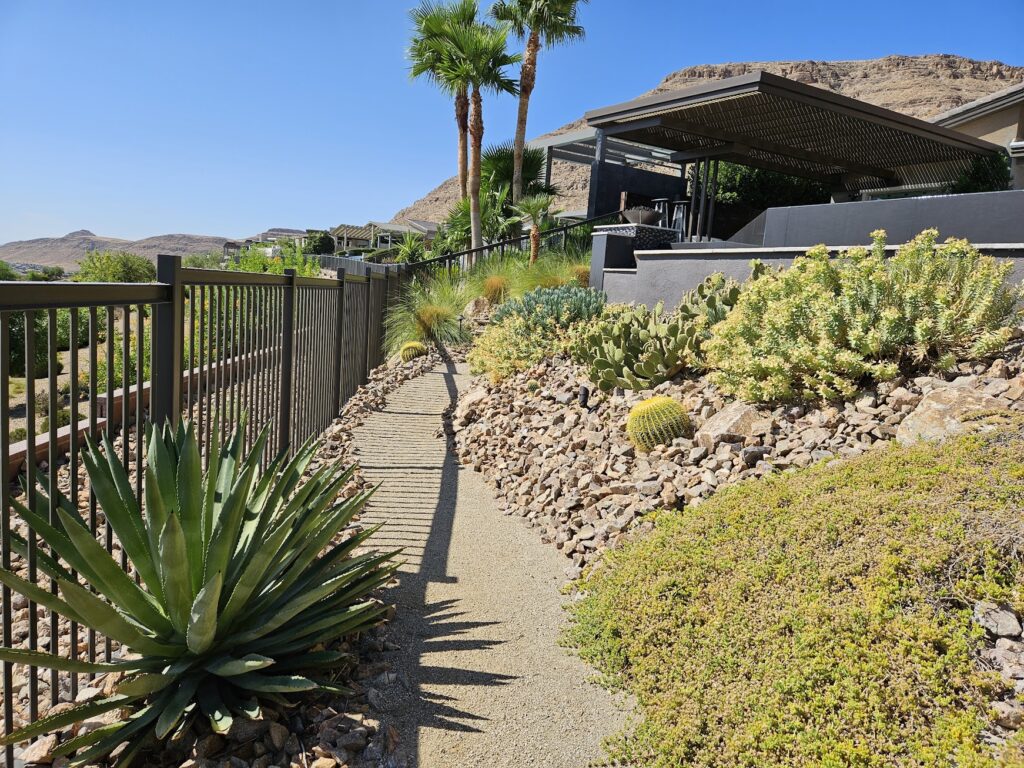
Planting trees and shrubs: October and November first, February through April second. Fall-planted trees get two mild seasons to establish roots before their first 110 °F summer.
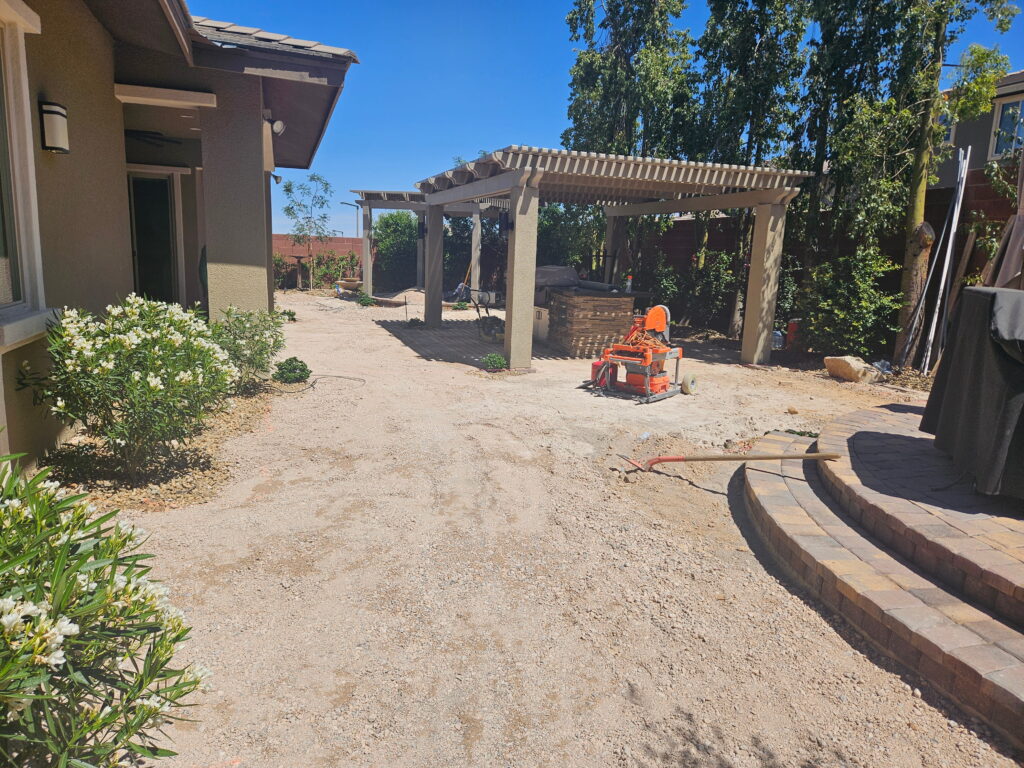
Pavers, travertine and hardscape: any month. Fall and winter are ideal; summer still works because crews start at 5 a.m. and finish before the worst heat.
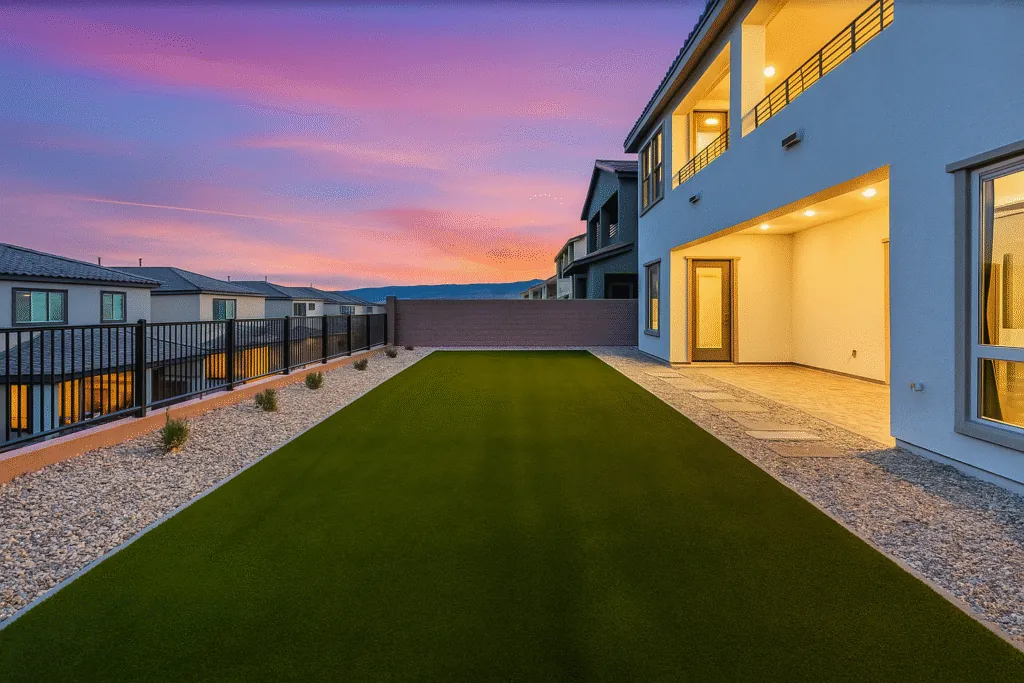
Artificial turf: any month. Summer installs are fine because turf doesn’t need to establish, though the crew works early.
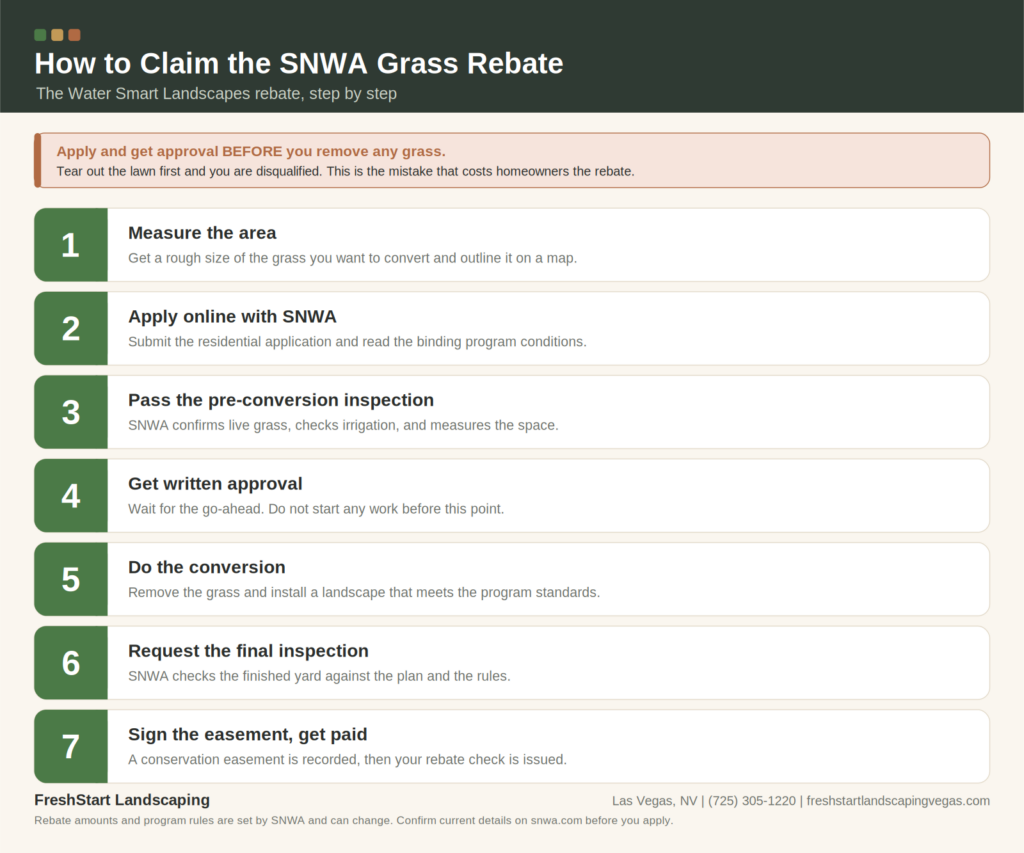
Grass removal and the SNWA rebate: apply any time, but October through March is the easiest window to convert, because the SNWA watering schedule drops to one day a week in winter and the dead-grass transition is less visible.
Month by month
| Months | Typical highs | What to do | What to avoid |
|---|---|---|---|
| October–November | 70–85 °F | Plant trees, shrubs and groundcovers; start hardscape and full backyard builds; apply for the SNWA rebate | Nothing — this is the best window of the year |
| December–January | 55–60 °F | Hardscape, turf, grass removal, irrigation retrofits; plant frost-hardy natives | Planting frost-tender species like Bougainvillea or Lantana in exposed spots |
| February–March | 65–75 °F | Second-best planting window; finish spring projects before HOA and contractor schedules fill | Waiting until April to book — spring is the busiest season for estimates |
| April–May | 80–100 °F | Finish planting by mid-April; turf and hardscape continue; set irrigation controllers for the summer schedule | New plantings after early May |
| June–August | 100–115 °F | Hardscape with early starts; turf installs; design and HOA submittals for fall projects | Any planting; polymeric sand and sealer work in afternoon heat |
| September | 90–100 °F | Book fall projects; start grass removal so planting lands in October | Planting until nights cool below 70 °F |
Why fall beats spring for planting
Spring planting works, but it gives a tree three months of mild weather before summer. Fall planting gives it seven. A Palo Verde or Desert Willow planted in October spends winter growing roots in soil that stays warm long after the air cools, then faces its first July with an established root system. The same tree planted in April is still shallow-rooted when the heat arrives, and that is when we see losses.
Fall also lines up with the SNWA watering calendar. The winter schedule allows one watering day a week, which is enough for new desert plantings on drip and keeps you well inside the rules. See our guide to the current Las Vegas water restrictions for the full schedule.
Hardscape has no bad season, but summer changes the schedule
Pavers and travertine go in year-round. What changes in summer is the workday: crews start at first light and stop by early afternoon, and some steps move to cooler hours. Polymeric sand activates poorly if the pavers are too hot to touch, and sealers flash off too fast in direct afternoon sun, so those steps happen in the morning. Expect a summer paver patio to take a day or two longer than the same patio in November.
Winter has its own small caveat: on the few nights that drop below freezing, sealing waits for a warmer day. Otherwise December and January are excellent build months, and crews are easier to schedule than in spring.
Artificial turf: the one project that doesn’t care about the calendar
Artificial turf is manufactured, so there is nothing to establish. It can be installed in any month, and summer installs are common because that is when homeowners get tired of watering. The practical difference is the surface temperature during installation: in July the crew works early and keeps the roll shaded until it is laid. If you are converting grass for the SNWA rebate, remember that the pre-inspection has to happen while the grass is still in place, in any season.
When to book
Fall is the best time to build, which means fall is also the busiest. If you want planting done in October or November, get the design and any HOA submittal moving in August or September. HOA architectural reviews in Summerlin, Henderson and the master-planned communities take two to four weeks, and that wait is the most common reason a fall project slips into December.
Frequently asked questions
What is the best month to plant trees in Las Vegas?
October. Daytime highs drop into the 70s and 80s, soil is still warm, and a tree planted in October gets about seven months of mild weather to establish roots before its first summer. November is nearly as good. Avoid planting trees from mid-May through September.
Can you install pavers in Las Vegas in the summer?
Yes. Paver and travertine patios are installed year-round. In summer, crews start at dawn and finish by early afternoon, and steps like polymeric sand and sealing are done in the cool of the morning. A summer patio typically takes one or two days longer than the same job in fall.
Is winter a good time for landscaping in Las Vegas?
Yes for hardscape, turf, grass removal and irrigation work, and for frost-hardy natives such as Agave, Red Yucca and Texas Sage. Skip frost-tender plants like Bougainvillea in exposed spots until February. Contractors are also easier to schedule in December and January than in spring.
When should I apply for the SNWA grass rebate?
Any time, but apply at least a month before you want the grass gone, because SNWA must inspect the lawn while it is still in place. Fall and winter conversions work best: the winter watering schedule allows one day a week, so new desert plantings on drip stay well within the rules.
Ready to plan a fall project? FreshStart Landscaping is a licensed Nevada C-10 contractor (#0092099) and SNWA-approved for grass conversions. Call (725) 305-1220 or request a free estimate.