Most people shop for plants in March. In Las Vegas, that’s backwards. The best time to put new trees and shrubs in the ground here is October and November.
A shrub planted in spring gets a couple of months to settle in before it faces 110-degree days. A shrub planted in October gets about seven. That extra time is the difference between a plant that limps through its first summer and one that barely notices it.
Why fall works so well here
- Warm soil, cool air. In fall the ground is still holding summer heat, so roots keep growing. The air is cooler, so the top of the plant isn’t losing water as fast. The plant spends its energy underground, which is exactly where you want it.
- Less stress on day one. Every plant goes through some transplant shock. Going through it at 75 degrees is a lot easier than at 105.
- Less water to get it established. New plants need extra water at first. In fall and winter that extra water goes a lot further because less of it evaporates. You’re also on a shorter watering schedule anyway, so there’s less chance of drowning a new plant.
- Roots are ready by June. By the time summer comes back, a fall-planted shrub has a root system that can reach moisture deeper in the soil.
What to plant now
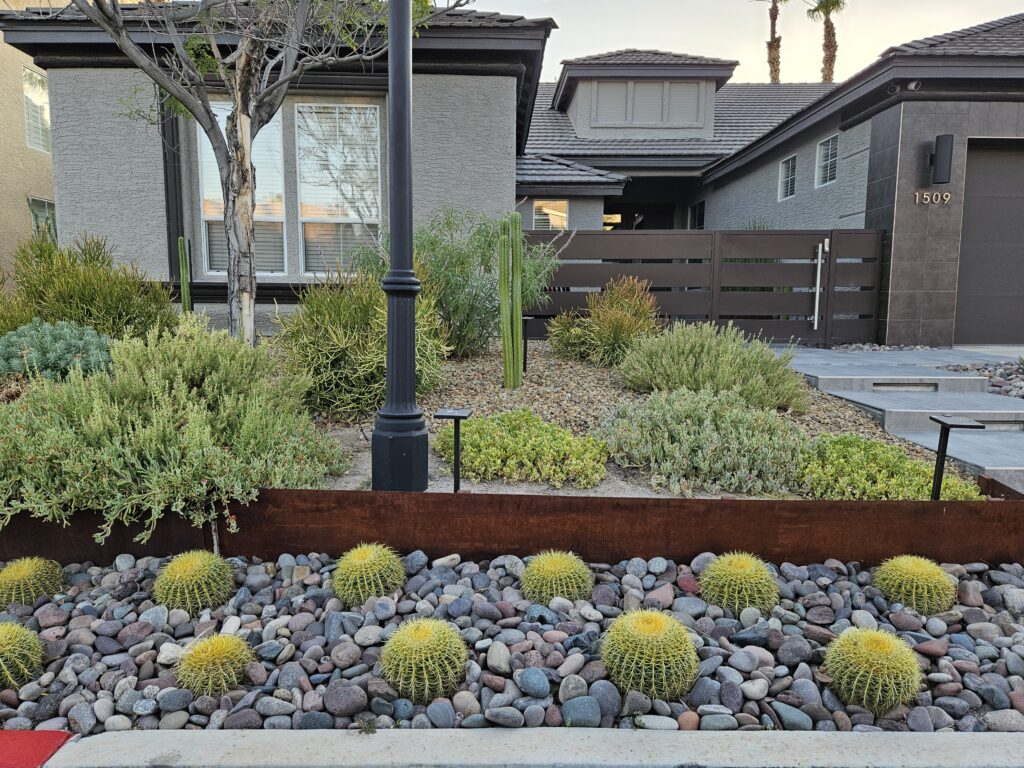
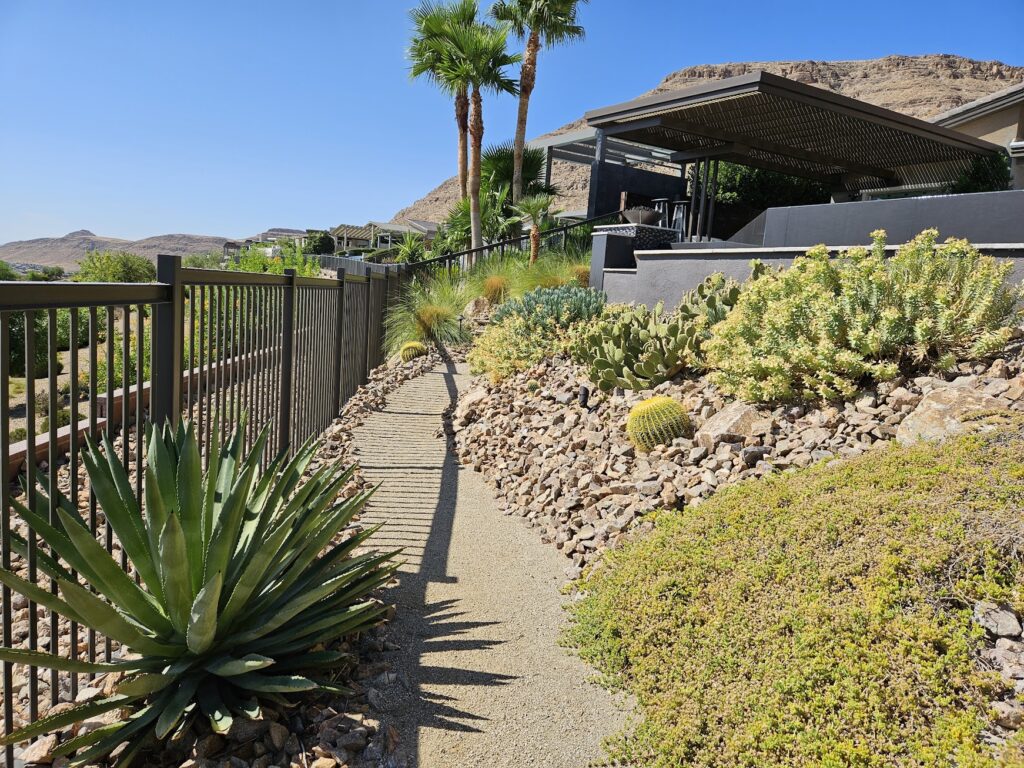
These are plants we install often in Centennial Hills, Summerlin, and Spring Valley yards. They handle our heat, our alkaline soil, and a drip schedule without complaint.
Shrubs to plant this fall
- Texas ranger (Leucophyllum): silver or green leaves, purple blooms after summer humidity
- Red yucca (Hesperaloe): tough, low water, long coral flower spikes hummingbirds love
- Desert spoon (Dasylirion): a clean, structured look for modern front yards
- Cassia and Mexican bird of paradise: fast color and fill
Groundcovers and perennials
- Damianita, blackfoot daisy, and desert marigold for low color
- Firecracker penstemon and brittlebush for spring blooms next year
Trees for fall planting
- Desert willow and palo verde are two of the most reliable desert trees for home yards
- Planting a tree as part of a grass conversion? SNWA’s Tree Enhancement Program pays $100 per new tree from its qualifying list. Check the list before you buy.
For a longer list organized by area, see our guide to the best drought-tolerant plants for Summerlin and Henderson.
What to wait on until spring
Fall is great for hardy plants. It’s not the time for anything that doesn’t like frost. The valley still gets freezing nights in December and January, especially on the west side and up in Centennial Hills.
Hold these until March or April:
- Bougainvillea
- Frost-tender succulents and some agave varieties (ask the nursery about cold hardiness)
- Lantana and other plants that die back hard in a freeze
They’ll get established fine in spring, and you won’t lose them to the first cold snap.
How we plant in Vegas soil
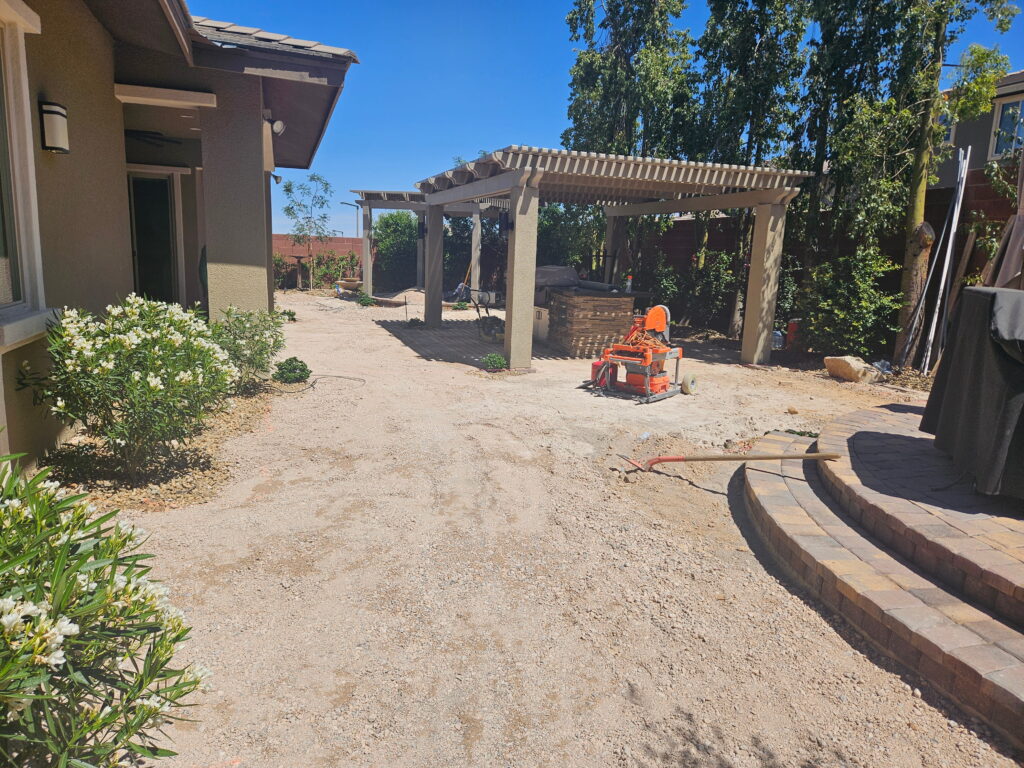
Most Las Vegas yards sit on hard, alkaline soil, and a lot of them have a layer of caliche. Here’s the process we use:
- Check drainage first. Dig the hole and fill it with water. If it’s still standing the next day, you’ve hit caliche. Break through it or pick a different spot. A plant sitting in a water-filled pocket will rot.
- Dig wide, not deep. Make the hole two to three times as wide as the root ball but no deeper. Roots spread out more than down.
- Plant at grade. The top of the root ball should sit level with the ground or slightly above. Planting too deep is one of the most common reasons new shrubs die.
- Backfill with native soil. Heavy amendments inside the hole can keep roots from growing out into the surrounding ground.
- Set emitters at the root ball, then move them out. Start with emitters close to the plant. As it grows over the next year or two, move them out toward the edge of the canopy.
- Mulch with rock, but keep it off the trunk. A layer of decorative rock holds moisture and keeps soil temperature steady. Pull it back a few inches from stems and trunks.
Watering new plants through fall and winter
Through October 31, you’re on the fall schedule: three assigned days a week, and SNWA recommends drip twice a week. Starting November 1, it drops to one day a week or less for drip.
For the first few weeks after planting, check the soil around the root ball with your finger. If it’s dry a couple of inches down, it needs water. If it’s wet, leave it alone. Overwatering kills more new plants in Las Vegas than heat does.
We cover the winter schedule step by step in our post on resetting your irrigation clock for November.
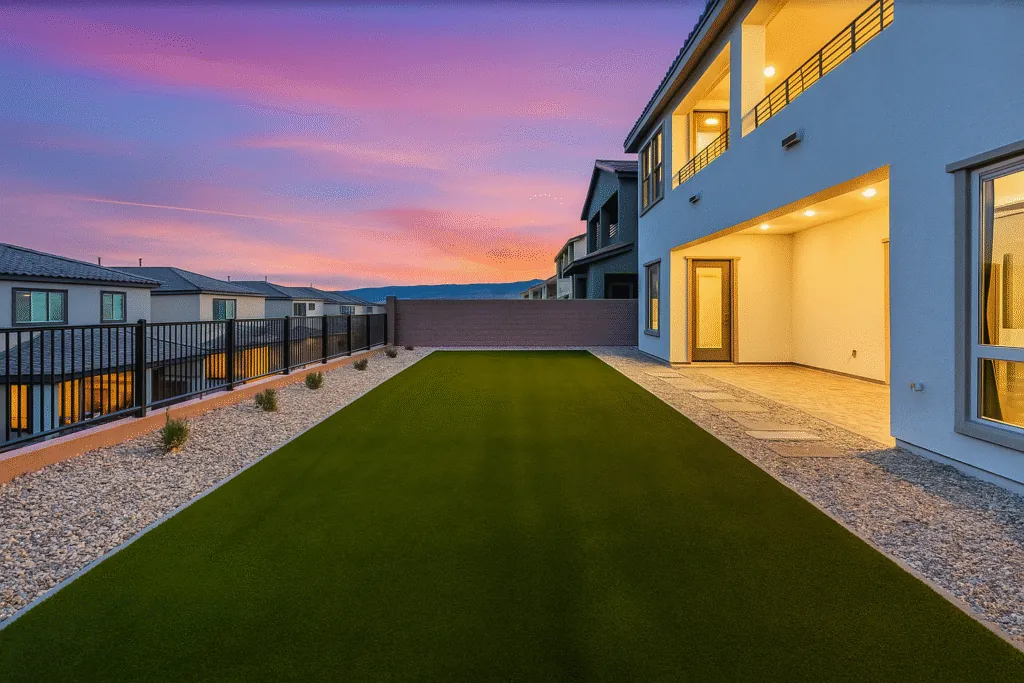
Turning your lawn into a planting bed?
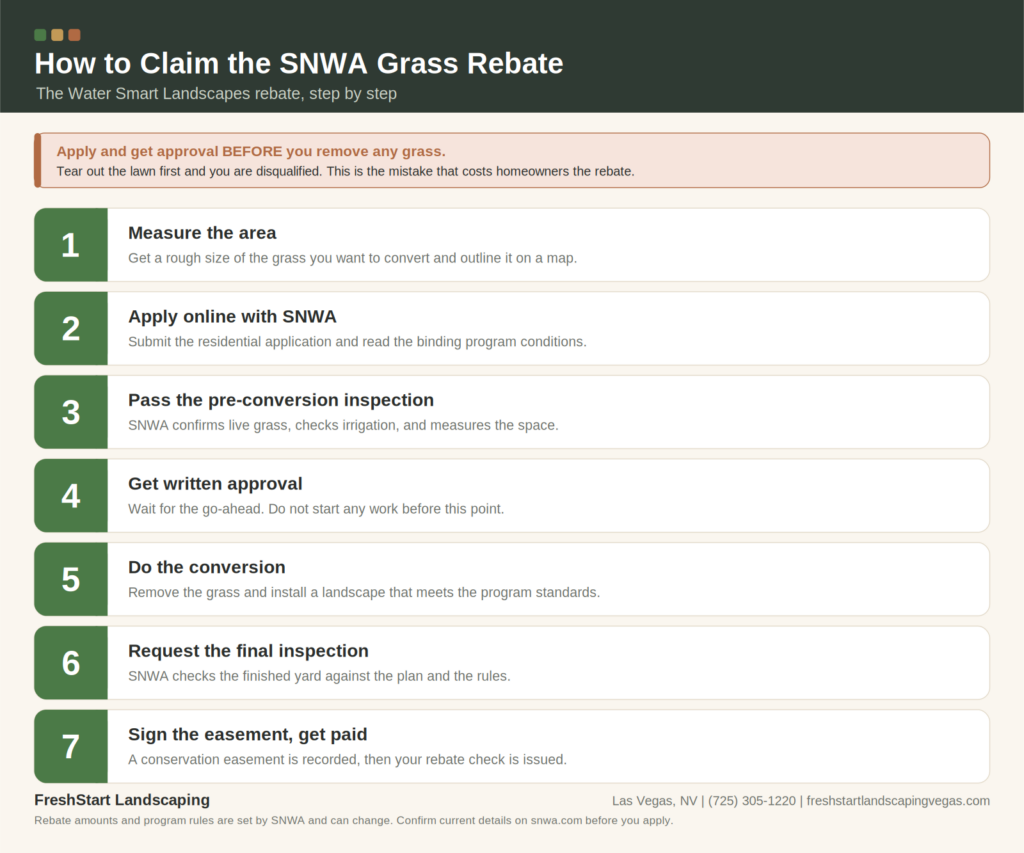
Fall is also the season when a lot of people convert grass. SNWA currently pays single-family homeowners $5 per square foot of grass replaced with desert landscaping, and Las Vegas Valley Water District customers get an extra $2 per square foot, for $7 combined on the first 10,000 square feet.
Two things to know before you start:
- The grass has to be alive and watered when SNWA does its pre-conversion visit. Don’t kill it first.
- Your finished area needs plants that cover at least 50 percent of it at mature size. Fall is a great time to put those plants in.
SNWA also warns that applications pile up in spring and fall, so site visits can take longer this time of year. Apply before you want to start. Our SNWA rebate guide walks through the whole process.
Common questions
- Is it too late to plant in November? No. Hardy desert shrubs and trees can go in through November and even into early December. Just hold off on frost-tender plants.
- Should I fertilize new plants in fall? Most desert plants don’t need it. If you do fertilize, keep it light. You want roots growing, not a flush of soft new leaves right before frost.
- Can I plant on a day that isn’t my watering day? Yes. Give the plant a deep soak by hand when it goes in. After that, let the drip system handle it on your schedule.
Let us plant it for you
Picking plants is the easy part. The drainage check, the drip layout, and getting everything in the ground before winter are what decide whether a new yard makes it through its first summer. We design and install low-water landscapes across Centennial Hills, Summerlin, and Spring Valley.
See our desert landscaping page for examples, or contact us for a free consultation. Call (725) 305-1220 to talk through your yard.
Rebate amounts and watering rules are set by SNWA and local water agencies and can change. Confirm the current details on snwa.com before you apply or plant.